Indigene
8.9 / 10 BenchmarkInstant native‑plant recommendations tailored to your exact location

Instant native‑plant recommendations tailored to your exact location
| Pricing Model | Free |
|---|---|
| Starting Price | Free |
| Free Trial | None |
| Official Pricing Tiers | View Complete Pricing Plans → |
| Ideal Audience & Best For | Landscape Architects, Municipal Greening Teams, Environmental NGOs, Home Gardeners |
| API & Integrations | REST API & Webhooks Ready |
| Community Upvotes | ▲ 30 votes by verified community members |
Indigene runs as a server‑less web service backed by a geospatial database of USDA‑approved native species and an AI‑enhanced ranking engine that scores plants by ecological benefit, climate resilience, and soil compatibility. It solves the chronic problem of generic landscaping advice by delivering hyper‑local, ecosystem‑focused plant lists that thrive where you stand, positioning itself as the go‑to tool for sustainable gardeners and land managers.
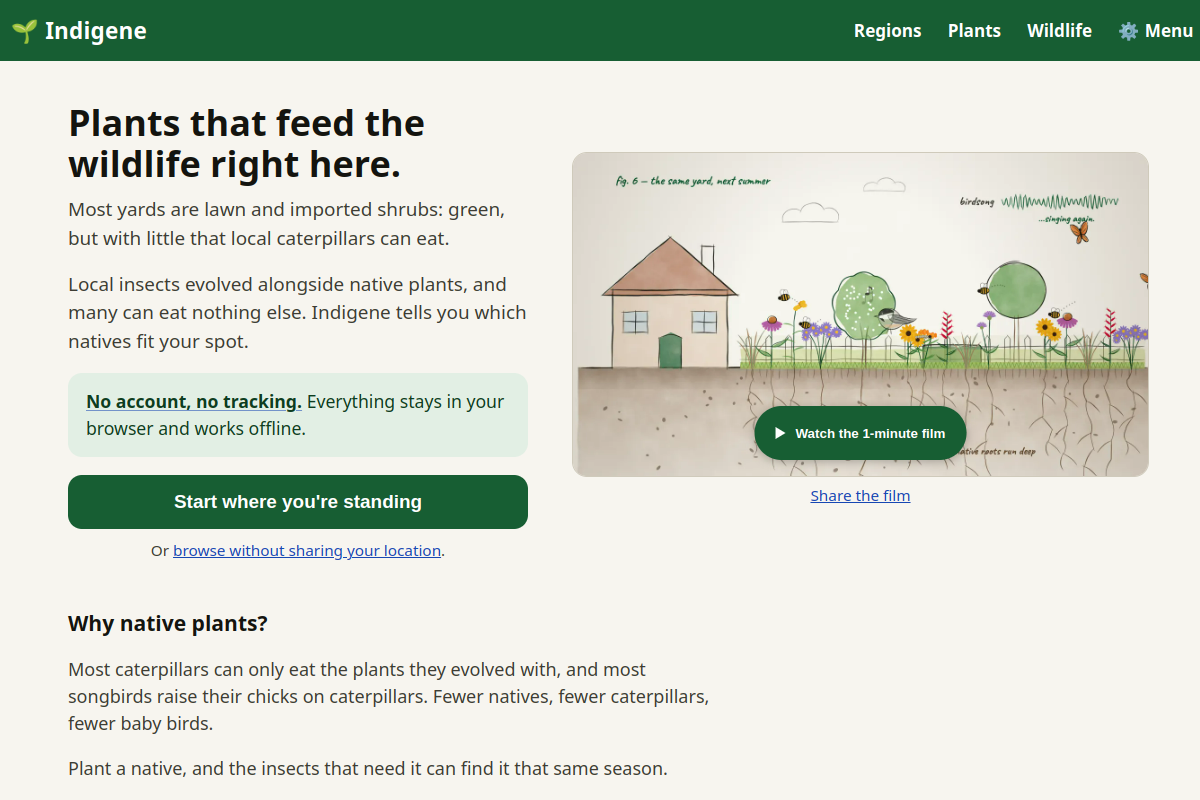
Users drop a pin or allow GPS access, then the UI presents a searchable catalog with filters for sun exposure, water needs, pollinator support, and more. Each entry includes high‑resolution photos, planting guides, and a “ecosystem score” generated from a blend of climate models, soil maps, and biodiversity data. The platform integrates with OpenStreetMap for location data, the USDA PLANTS API for taxonomy, and a fine‑tuned LLM that translates technical data into plain‑language care instructions.
Ideal for municipal planners, ecological NGOs, residential landscapers, and hobbyist gardeners, Indigene cuts research time by up to 80 % and reduces plant‑failure rates, delivering measurable ROI in water savings and habitat restoration. It scales from single‑home projects to city‑wide greening initiatives, making native planting decisions fast, data‑driven, and environmentally sound.
Indigene is a web‑based native‑plant recommendation engine. After you share your location, it cross‑references a geospatial native‑species database with climate and soil data, then ranks plants by an AI‑driven ecosystem score, delivering a curated list with planting instructions.
Indigene is completely free to use. There is no paid tier or trial period; all features are accessible without a subscription.
It serves landscape architects, city greening programs, environmental NGOs, and DIY gardeners who need accurate, location‑specific native plant suggestions.
Indigene runs as a responsive web app on desktop and mobile browsers, with native iOS and Android wrappers. It integrates USDA PLANTS API, OpenStreetMap, and climate datasets, and offers a REST API for custom workflows.